The vibrant symphony of motorbikes, the aromatic steam rising from a bowl of phở, the kaleidoscope of lanterns in Hội An—Vietnam is a country that floods the senses. Yet, for many travelers, one of the most significant barriers to a deeper connection is the lyrical, and often intimidating, Vietnamese language. At first listen, it can seem like an impossible code, a series of melodic rises and falls that defy replication. This is because Vietnamese is a tonal language with six distinct tones, where a single word like “ma” can mean ghost, mother, horse, or tomb depending on its inflection. But don’t let this discourage you. You don’t need to become a linguistic master overnight. The secret to unlocking a more authentic travel experience lies in embracing a few simple phrases. Locals don’t expect perfection; they see your attempt to speak their language as a profound gesture of respect, an effort that opens doors and builds bridges of genuine communication far more effectively than any guidebook.
The journey begins with the simplest of greetings. While you might hear locals use a variety of salutations based on age and gender, the universal “hello” for any traveler is “xin chào” (pronounced sin chow). This single phrase is your passport to friendly interactions everywhere, from the bustling streets of Hanoi to the tranquil rice paddies of Sapa. Following this, a heartfelt “cảm ơn” (gahm uhn) for “thank you” is perhaps the most valuable phrase you can learn. Use it when a vendor hands you a delicious bánh mì, when someone gives you directions, or when your host brings you a cup of tea. It’s a small word that carries immense weight. Equally useful is “xin lỗi” (sin loy), which serves as both “sorry” and “excuse me.” It’s perfect for navigating a crowded market or gently getting someone’s attention. Mastering these three simple expressions forms the bedrock of polite communication and will be met with warmth and appreciation, transforming transactional encounters into memorable human connections.
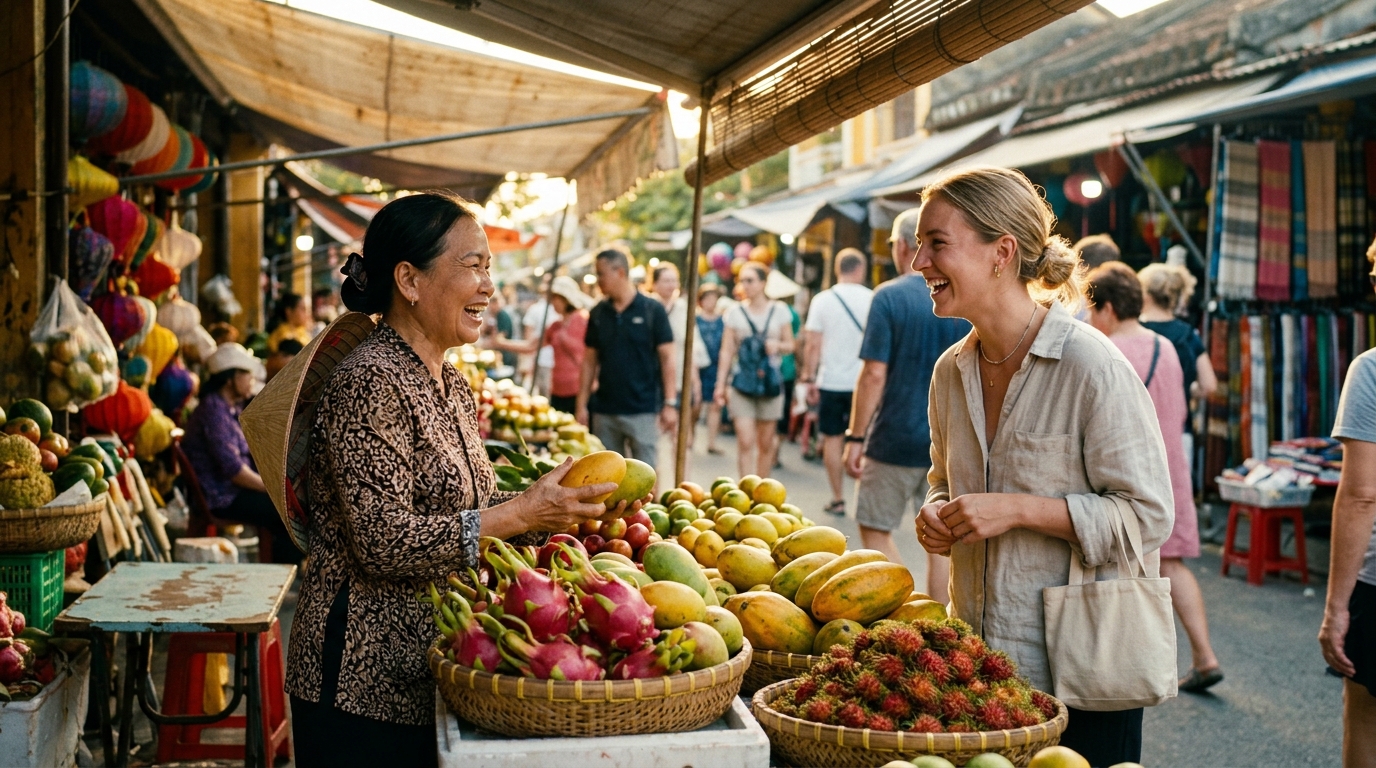
Once you’re comfortable with the basics, it’s time to dive into the heart of Vietnamese culture: its markets and its food. Standing before a stall piled high with exotic fruits or colorful textiles, pointing and gesturing can only get you so far. Mastering “Bao nhiêu tiền?” (bow nyew ti-en), meaning “How much?”, is your key to navigating markets like a local. It empowers you to engage directly with sellers and participate in the friendly art of bargaining. When you finally sit down on one of those iconic tiny plastic stools, ready to eat, “Cho tôi…” (chaw toy…), meaning “Give me…”, followed by pointing at a menu item, is all you need to order. After that first incredible bite of bun cha or cao lầu, expressing your delight is simple. Yelling “Ngon quá!” (ngon qwa), meaning “So delicious!”, will earn you beaming smiles from the vendor and might even get you an extra helping. And when your belly is full, a simple “tính tiền” (tin ti-en) will signal that you’re ready for the bill.
Beyond these essentials, learning a few numbers—”một, hai, ba” (one, two, three)—will add another layer to your interactions. While you may never fully grasp the intricate nuances of the Vietnamese language on a short trip, every word you learn is a step toward a richer journey. Remember that your pronunciation will likely be imperfect, and you might occasionally mix up your tones, perhaps accidentally asking for a horse instead of rice. This is all part of the experience. The most important thing is the effort itself. Don’t be afraid to try, to stumble, and to laugh at your mistakes. Locals will almost always understand your intent and appreciate your willingness to engage. In the end, your smile is the ultimate tool for universal communication, bridging any gaps your pronunciation might create and ensuring your memories of Vietnam are filled not just with beautiful sights, but with the warmth of its incredible people.
Leave a Reply